
Plastic Shredder Machine


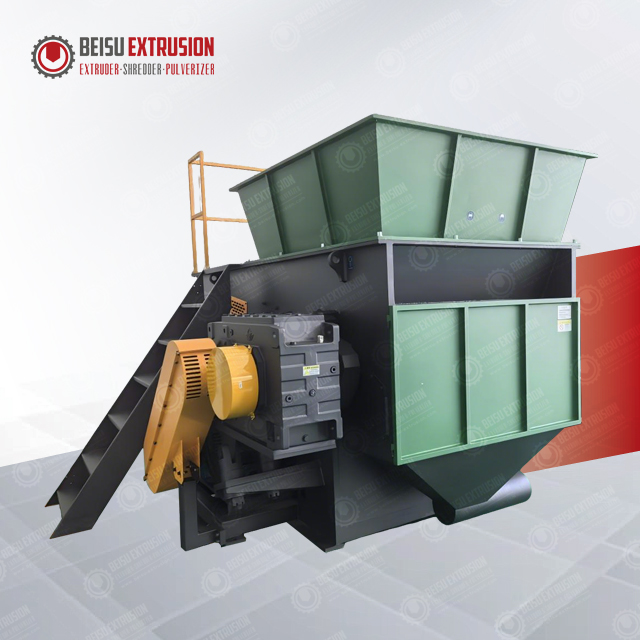
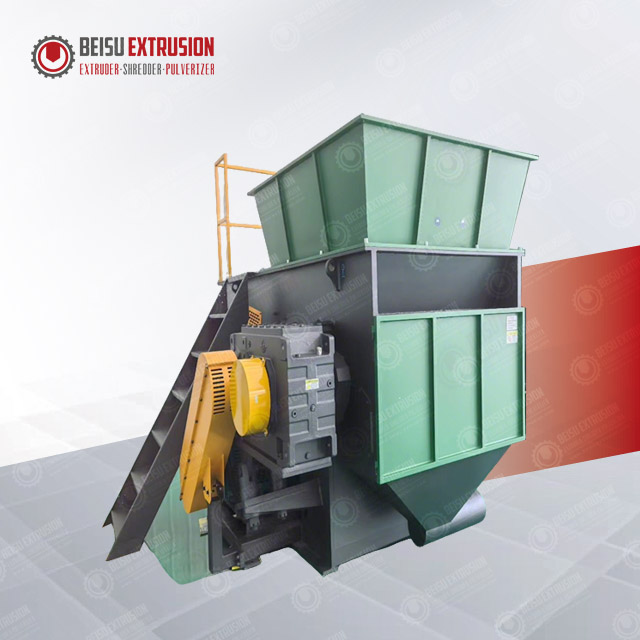
Compact Twin-Shaft Shredder for Recycling Applications
The compact twin-shaft shredder uses two counter-rotating shafts with interlocking cutter blades to shear and tear bulky waste into smaller pieces. It is suitable for processing plastic waste, rubber, cardboard, and other selected recyclable materials. Its low-speed, high-torque design supports efficient primary shredding and waste volume reduction.
- Machine Type: Compact Twin Shaft Shredder
- Cutting System: Two Counter-Rotating Shafts
- Drive System: Electric Motor with Gearbox
- Applications: Plastic, Rubber, Cardboard and Selected Industrial Waste
Call Us For Any Inquiry
Compact Twin-Shaft Shredder Introduction:
A compact twin-shaft shredder is a size-reduction machine used to process bulky waste into smaller pieces for easier handling, transportation and further recycling. It uses two rotating shafts fitted with cutting discs or blades to grip, shear and tear incoming materials.
Unlike equipment designed primarily for fine grinding, a twin shaft shredder focuses on primary shredding. Its low-speed, high-torque cutting mechanism is particularly useful for materials that are difficult to handle with conventional high-speed size-reduction equipment.
For small recycling facilities and production workshops, a compact machine can provide a practical way to manage production scrap and selected post-consumer waste without requiring a large shredding system.
Working Principle of a Twin-Shaft Shredder:
The shredding process relies on the interaction between two cutter shafts, the drive system and the cutting chamber.
- Counter-Rotating Shafts: Two parallel shafts rotate in opposite directions, drawing material into the cutting chamber. Interlocking cutters grip the feed and prevent it from simply moving across the cutting surface.
- Controlled Shearing and Tearing: As the cutters engage with the material, they apply opposing forces that shear and tear it into smaller pieces. The resulting particle or strip size depends on the cutter design, material properties and operating conditions.
- Torque Transmission: An electric motor and reduction gearbox provide the torque needed to drive the shafts. Motor power, gear ratio and shaft design must be matched to the expected load rather than selected by motor power alone.
- Overload Response: If the cutting chamber becomes overloaded, a suitably configured control system can stop the drive and use reverse rotation to help release trapped material. The effectiveness of this function depends on the control logic, drive system and nature of the obstruction.
Which Materials Can a Compact Double Shaft Shredder Handle?
Material selection is one of the most important steps in choosing a shredder. Different materials require different cutter geometries, torque levels and feeding arrangements.

- Plastic Scrap: Suitable applications may include HDPE and PP containers, plastic components, rejected molded products and selected plastic production waste. Thin films, flexible plastics and large molded parts may require different feeding and cutter configurations.
- Rubber and Flexible Waste: Rubber sheets, rubber components and selected elastic materials can be processed using a suitable cutting system. Highly elastic or reinforced materials should be evaluated before machine selection.
- Packaging and Cardboard: Cardboard boxes and packaging waste can be shredded to reduce storage volume and simplify material handling. The required capacity depends on feed density, moisture and feeding conditions.
- Electronic and Light Metal Scrap: Selected electronic housings, cables and non-ferrous metal scrap may be suitable for shredding when the machine is designed for the application. Batteries, hazardous electronic components and metal-heavy mixed waste require specific safety and equipment assessments.
Not every compact shredder can process every material listed above. A material sample or detailed feed description helps determine whether a particular configuration is suitable.
Key Factors in Compact Shredder Design:
- Cutter Geometry and Thickness: The number of teeth, cutter profile, spacing and thickness affect material gripping, cutting performance and the resulting output. Cutter dimensions should be selected according to the feed material and machine design.
- Cutter Steel and Heat Treatment: Tool steel grades such as Cr12MoV, D2 and SKD11 may be considered for suitable applications. The final material and heat treatment should balance wear resistance, toughness and resistance to chipping.
- Motor and Gearbox: Compact shredders may use single-motor or dual-motor drive systems. Some applications may fall within a 5.5–22 kW motor-power range, but actual power requirements vary with material type, feed dimensions and throughput.
- Shaft Speed and Torque: Some low-speed shredders operate around 15–30 RPM. This is a reference range rather than a universal specification. The appropriate shaft speed and torque must be determined for the selected model and application.
- Screen-Free Operation: Many twin shaft shredders do not use a bottom sizing screen. This supports coarse shredding of irregular, flexible or bulky materials. However, the absence of a screen also means that the machine does not guarantee a uniform final particle size.


Technical Parameters (DBS-300/DBS-400 Twin-Shaft Shredder):
DBS-300 Double Shaft Shredder:
| Item | Detail |
| Model | DBS-300 |
| Applicable Material | Marine waste; non-ferrous metal under 2 mm thickness |
| Chamber Size | 300 x 200 mm (feed pieces must be smaller than the chamber) |
| Rotor Knife Diameter | 180 mm |
| Speed | 16 RPM |
| Knife Material | 9CrSi, 12 mm thick, 7 teeth |
| Knife Hardness | HRC 55, adjusted to the material |
| Moving Knives | 24 pcs |
| Fixed Teeth | 24 sets |
| Wall Thickness | 16 mm |
| Frame Steel | Q345B, square-tube frame |
| Drive Power | 3 kW, 380 V, 60 Hz, 3-phase |
| Net Weight | About 300 kg |
| Capacity | 80-100 kg/hr |
DBS-400 Double Shaft Shredder:
| Item | Detail |
| Model | DBS-400 |
| Chamber Size | 400 x 320 mm |
| Blade diameter | 180 mm |
| Speed | 16-18 RPM |
| Knife Material | 9CrSi, 20 mm thick |
| Knife Hardness | HRC 58-60, adjusted to the material |
| Moving Knives | 20 pcs, multi-tooth |
| Comb Plates | 20 pcs |
| Spacer Rings | 20 pcs |
| Main Shaft | 42CrMo |
| Wall Thickness | 20 mm |
| Frame Steel | Q235B, square-tube frame |
| Drive Power | 7.5 kW |
| Capacity | 100-200 kg/hr |
| Dimensions | 1440 x 580 x 1510 mm |
| Net Weight | 700 kg |
| Motor Protection | TP44 |
| Motor and Gearbox | Major Chinese motor brand; K-series gearbox |
| Bearings | Wafangdian (ZWZ) |
| Electrical Components | Mainly Schneider |
| Noise | Below 75 dB |
Small Twin-Shaft Shredder FAQ:
Q1: What materials can a small double shaft shredder process?
Small dual-shaft shredders can process a wide variety of rigid, flexible, and bulky materials:
▪ Plastics: HDPE/PP bottles, PET lumps, film rolls, plastic containers, and small purge lumps.
▪ E-Waste & Scrap Metal: Hard drives, circuit boards, aluminum cans, scrap copper, and small household appliances.
▪ Rubber, Textiles & Others: Bicycle/motorcycle tires, rubber gaskets, cardboard boxes, wooden pallets, and leather.
Q2: What is the difference between a twin-shaft shredder and a single-shaft shredder?
▪ Twin-Shaft Shredder: Operates at low speed (15–30 RPM) and high torque. It relies on shearing force and does not have a bottom screen. It is ideal for primary crushing of tough, elastic, or bulky materials without clogging.
▪ Single-Shaft Shredder: Operates at high speed (100+ RPM) with an internal screen, producing fine, uniform plastic granules (e.g., 6–12 mm).
Q3: How does the automatic reversing system work?
When the shredder encounters hard, unshreddable materials or a severe overload that causes motor current to spike, the PLC controller automatically stops the drive, reverses the blade shafts for a few seconds to clear the jam, and then resumes forward operation.
Q4: Which cutter material and blade configuration is best?
▪ Alloy Steel: Heat-treated Cr12MoV, D2, or SKD-11 alloy steels are standard, providing high wear resistance and toughness.
▪ Tooth Geometry & Thickness: Blade thickness (typically 10 mm to 30 mm) and the number of teeth (1 to 5 teeth) determine the final strip output size and grabbing force.
Q5: How often do the blades need sharpening or replacing?
Blade wear depends on the abrasiveness of the material being processed:
▪ Clean Plastics / Paper: Blades typically last 800 to 1,500 hours before requiring surface grinding or hardfacing repair.
▪ Abrasive Materials (Fiberglass, metal, dirty plastics): Maintenance may be required every 300 to 600 hours.
Q6: What power rating and motor specifications are required for small equipment?
Small dual-shaft shredders are typically equipped with electric motors ranging from 5.5 kW to 22 kW (7.5 HP to 30 HP), paired with heavy-duty planetary gearboxes or helical gear reducers to maximize output torque.
Recommended Products
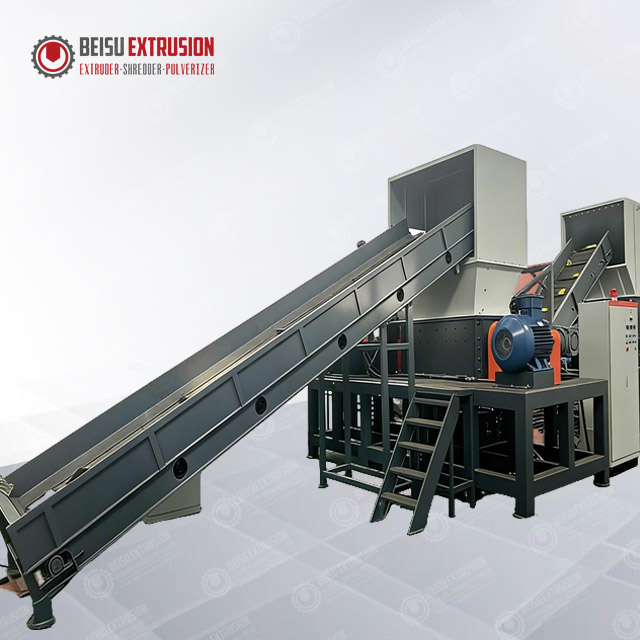
Customized plastic extrusion & mixing grinding feeding system


Contac us Now
Zhangjiagang Beisu Machinery Co., Ltd.

Hot-Tel
+86-139 1329 4389

Experience

ADD
NO.12,Yuefeng Road,Nanfeng Town,
Zhangjiagang City,Jiangsu Province,China
Zhangjiagang City,Jiangsu Province,China


 English
 Spanish